Wedge or Trim? The “best” labiaplasty technique depends on your anatomy. Dr. Aycock compares these two popular methods, explaining how to preserve natural edges or achieve uniform color for a comfortable, confident result.
When women seek labiaplasty to resolve chafing, discomfort during intimacy, or self-consciousness in swimwear, they often discover there isn’t just one way to perform the surgery. In the world of aesthetic vaginal surgery, the two primary techniques are the Wedge and the Trim.
A skilled plastic surgeon should be proficient in both, as the “best” technique depends entirely on your unique anatomy and your aesthetic goals.
The Wedge Technique: Preserving the Natural Edge
The “Wedge” labiaplasty involves removing a pie-shaped piece of tissue from the thickest part of the labia minora.
Why I frequently recommend the Wedge:
- Natural Texture: Because we remove tissue from the center and bring the edges together, the natural, delicate, and often darker edge of the labia is preserved.
- Structural Integrity: This method allows for a more significant reduction in volume without making the labia look “clipped” or artificially straight.
- Comprehensive Results: The wedge is incredibly versatile. It can easily be extended to incorporate a Clitoral Hood Reduction if we need to address balance.
Some surgeons avoid the wedge due to concerns about “wound dehiscence” (the edges pulling apart), but when performed with meticulous care and a focus on preserving the blood supply, the healing process is very reliable.
The Trim Technique: Uniformity and Color
The “Trim” labiaplasty involves removing a strip of tissue along the entire outer edge of the labia.
When the Trim is the better option:
- Color Correction: If a patient is specifically bothered by dark pigmentation or irregular coloring along the very edge of the labia, the trim removes that edge entirely, leaving a uniform color.
- Simplicity: For certain anatomical shapes, a straightforward trim is the most direct path to a smaller profile.
The “Scalloping” Risk: The edge of the labia is very thin and sensitive. If a trim isn’t sutured with several layers of internal, dissolving stitches, it can heal with a “scalloped” or “saw-tooth” appearance. I take extra care to ensure the new edge is smooth, soft, and looks completely natural.
Hear From Dr. Aycock
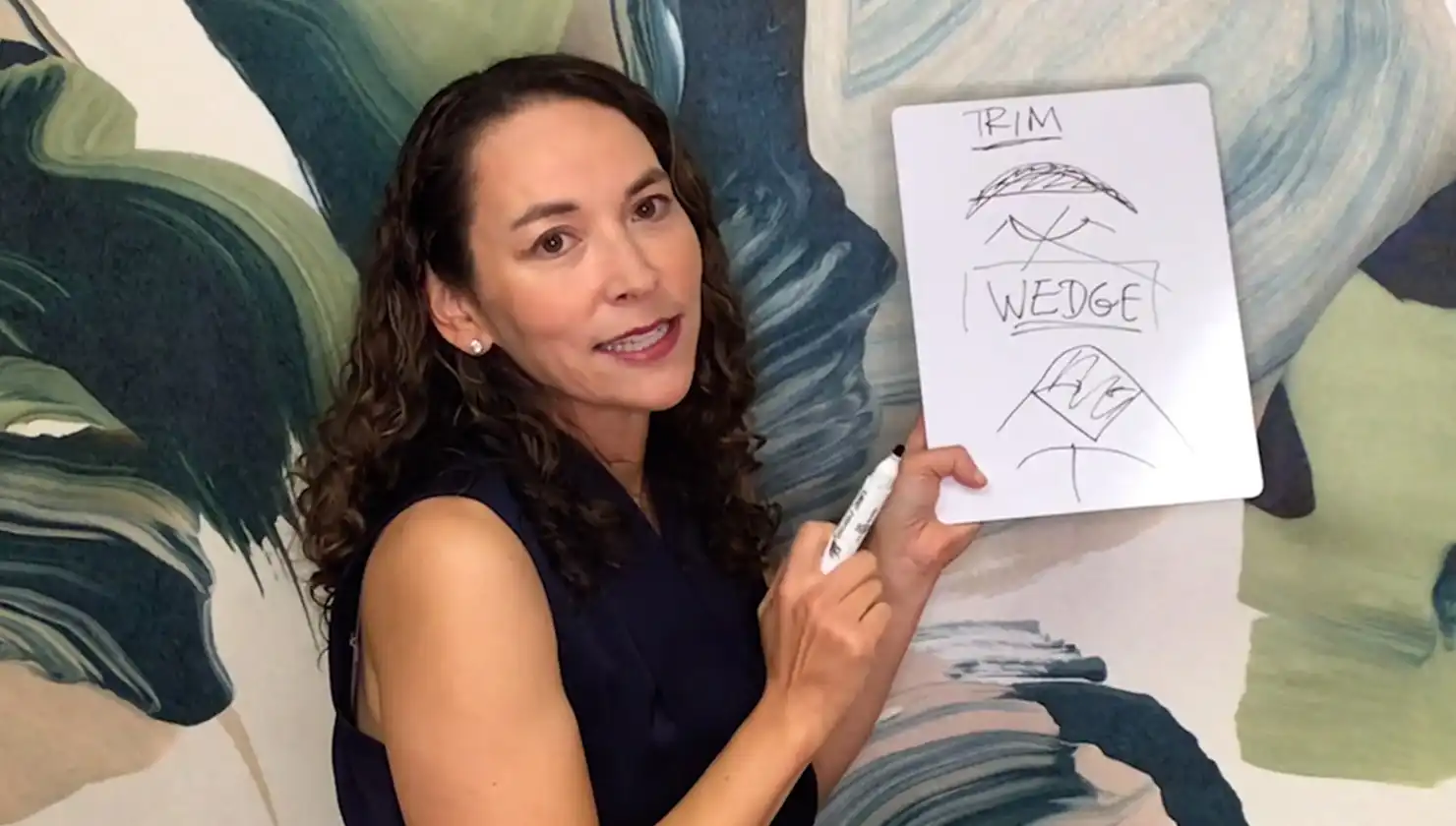
In this short video, I break down these two techniques and explain how I help my patients decide which path is right for them.
Which Method is Right for You?
The goal of any labiaplasty isn’t to create a “perfect” look—because there is no such thing. The goal is to create a look and feel that makes you comfortable.
- If you love the natural look of your labial edges but want them smaller: The Wedge is likely for you.
- If you are primarily bothered by the color or “frayed” appearance of the edges: The Trim may be your best choice.
During your consultation, we’ll look at your anatomy together and discuss which technique will offer the most functional relief and the most beautiful, natural-looking result.
Ready to Feel Comfortable Again?
Vaginal discomfort shouldn’t hold you back from your favorite activities or your confidence. If you’re ready to explore your options in a supportive, female-led environment, let’s start the conversation.