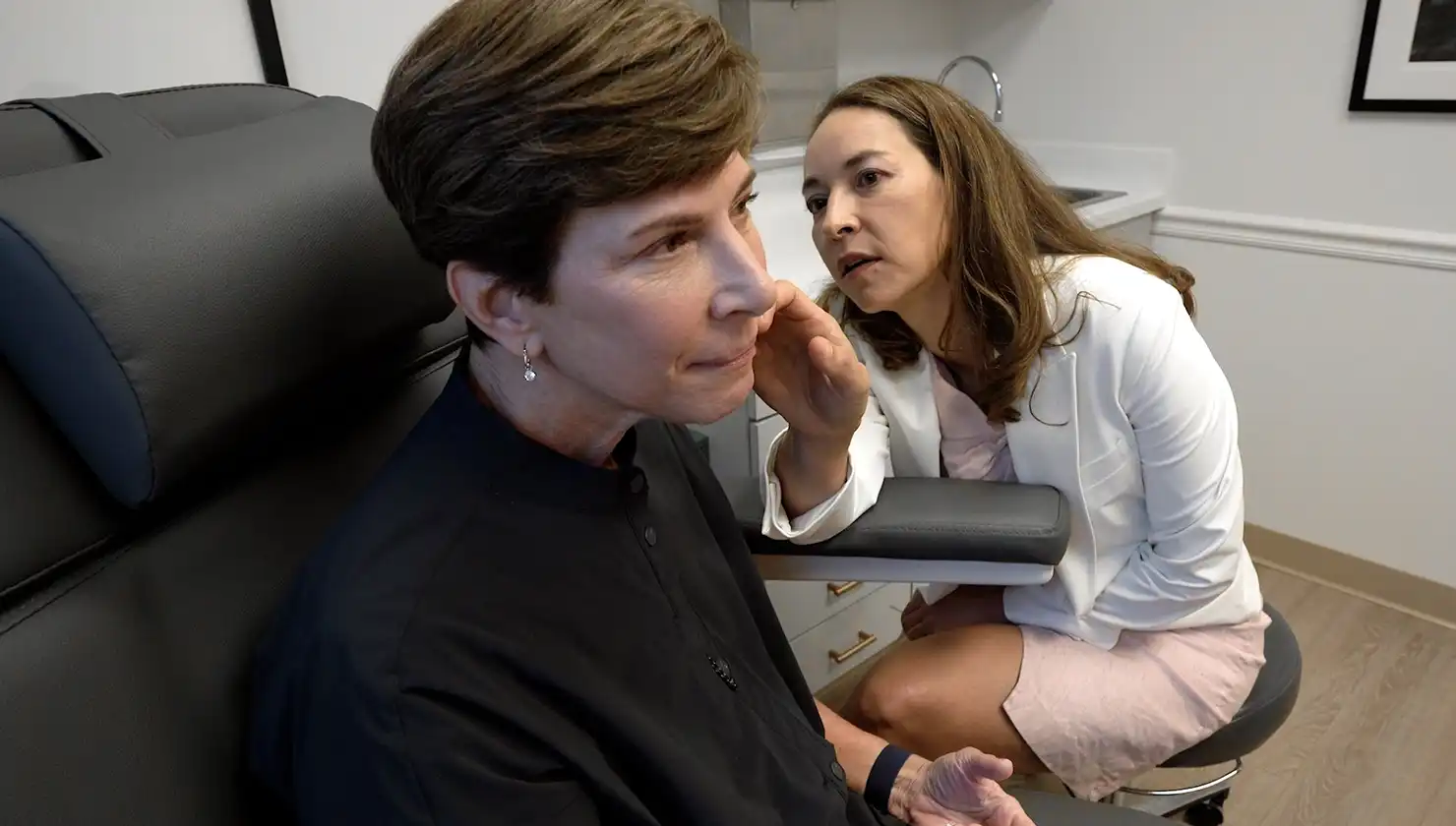
Stretched or torn earlobes? Dr. Aycock explains the “V-Y flap” technique for a notch-free repair and why earlobe reduction is the secret to a younger-looking ear. Learn about recovery and how to choose the best jewelry for your new piercings.
Earlobe repair is actually one of my favorite in-office procedures. Because it is performed while you are awake under local anesthesia, it gives me a wonderful opportunity to truly connect with my patients and hear their stories while we work.
Whether your earlobes have been stretched by years of heavy statement earrings, accidentally torn by a snagged stud, or intentionally stretched with gauges, the fix is often simpler than you might think.
Why Do Earlobes Tear or Stretch?
The skin of the earlobe is delicate and lacks the structural support of bone or cartilage. Over time, heavy jewelry can act like a slow-motion “cheese wire,” gradually lengthening the piercing hole.
A complete tear often happens in an instant—getting an earring caught on a sweater or a child’s wandering hand. This is also why I always tell my patients: please don’t sleep in your earrings! Constant pressure against the pillow can accelerate stretching.
The Technique: Precision Beyond a "Quick Stitch"
While it might seem like a simple case of “sewing the gap,” a professional earlobe repair requires a bit more geometry.
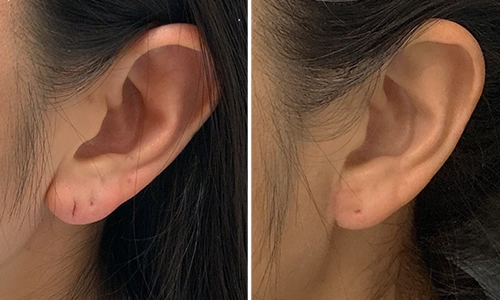
- The V-Y Flap: If you simply sew a straight line, the scar can contract as it heals, creating a “notch” or an unnatural indent at the bottom of the lobe. I utilize a tiny V-Y flap technique to ensure the border of your earlobe remains smooth, round, and continuous.
- Earlobe Reduction: Did you know our ears continue to grow as we age? For older patients, the lobes can become elongated or “droopy” regardless of piercings. In these cases, I can perform a subtle earlobe reduction or “tuck” during the repair. It’s a small change that makes the entire ear look years younger.
Recovery and Repiercing
The procedure is quick, and the downtime is minimal.
- Stitches: These stay in for about a week.
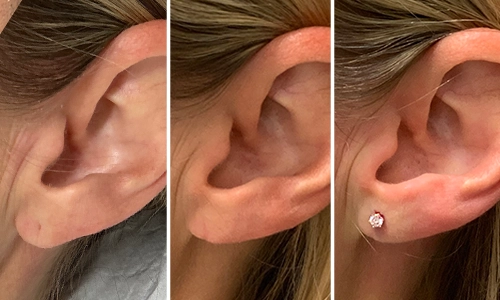
- The Scar: There will be a tiny, fine line, but because of the way we orient the repair, it is usually barely noticeable once healed.
- Timing: I recommend waiting at least two months before re-piercing. This allows the internal scar tissue to gain enough strength to support jewelry again.
Choosing the Right Jewelry
When you are ready to repierce, the quality of the metal is vital. To avoid allergic reactions or “contact dermatitis” that can irritate a new piercing, I recommend a flat-back stud made of:
- Titanium
- 14K Gold
- Platinum
If you bring your preferred studs to your follow-up appointment, I am more than happy to perform the repiercing for you to ensure it is placed in the perfect, most structurally sound location.
Ready to Wear Your Favorite Earrings Again?
It is a small procedure, but the joy it brings is immense. There is something so satisfying about being able to reach into your jewelry box and wear your favorite pieces without worry. If you’ve been hiding your ears behind your hair or avoiding earrings altogether, let’s sit down and discuss how we can restore your lobes in a quick, comfortable office visit.